

- 07 | 10 | 2026
Explore our resources
Support

Latest Insight
Paper, paper everywhere and barely time to think: law firm document management
Read moreAbout the company
Latest Insight
Paper, paper everywhere and barely time to think: law firm document management
Read moreWhy Information Security Can’t Stop at the Firewall

Secured at Every Level The firewall is not enough
Ask most organisations about their information security strategy and they’ll talk about cyber defences. Firewalls. Endpoint protection.
All-important but none of it covers the filing cabinet in an unlocked storeroom, the backup tapes that missed their last rotation, or the archived contracts in a corridor because the offsite collection got cancelled and nobody rescheduled it.
These aren’t dramatic failure points. They’re quiet, everyday ones. And they’re exactly the gaps that regulators find on audit day.
Not sure where the gaps are?
Speak to one of our experts today.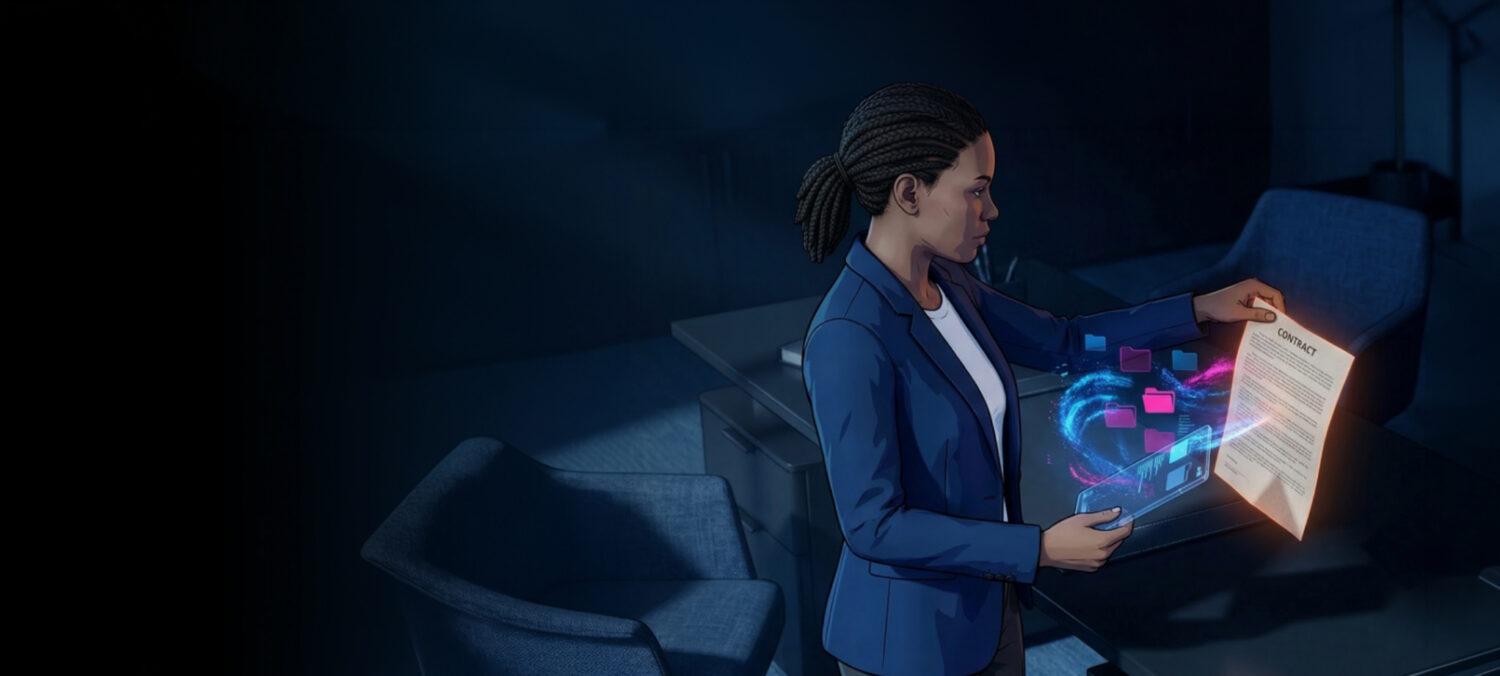
Information lifecycle Your information has a lifecycle. Your security should too.
Every piece of information your organisation holds gets created, used, archived, and eventually destroyed. Most security strategies cover the active digital part of that journey. The physical and operational layers – archives, tape, microfiche tend to get managed separately, inconsistently, or not at all.
That’s not a technology gap. It’s a governance gap. And it’s far more common than most organisations realise.

Cyber attacks on UK businesses now cost on average £19,400 for medium sized firms
Dual Threat Physical and digital. Both matter.
Even the most digitally advanced organisations hold physical records that need proper management original signed documents, deeds, long-retention archives. Some can be digitised. Some need to stay physical for compliance reasons. All of them need the same rigour you’d apply to your digital estate.
On the other side: ransomware doesn’t care how sophisticated your infrastructure is. If it can reach your data, it can encrypt it – including your cloud backups. An air-gapped tape sitting offsite is one of the very few things a cyberattack genuinely cannot touch. And when hybrid teams are sharing sensitive documents without proper access controls, the exposure isn’t coming from outside. It’s built into the process.
Want to understand how OASIS approaches the whole estate?
Talk to our teamThe OASIS Solution One partner. No gaps.
OASIS Group is Europe’s largest privately-owned information management provider. No handoffs between suppliers. No grey areas about who’s responsible when something goes wrong.
Your paper can't be hacked
But it can be lost, damaged, or accessed by the wrong hands. Secure offsite archive storage means your physical records are tracked, protected, and retrievable with a full chain of custody from day one.
Your backup needs a backup
Cloud-only disaster recovery has one fatal flaw: ransomware can reach it. Air-gapped tape storage sits completely offline, physically offsite, and completely beyond the reach of any cyberattack.
Digitisation only counts if it's compliant
Scanning your records reduces physical risk but only if it’s done in certain specifications, audit trails, and a process that holds up under regulatory scrutiny. We do it right, whether that’s scanning at point of receipt, converting legacy archives, or on-demand retrieval.
Collaboration shouldn't mean compromise
Hybrid teams need to share documents but generic cloud tools weren’t built for compliance-heavy environments. FileSmart gives your people everything they need to work flexibly, with the access controls, version management, and audit trails that regulated industries actually require.
Destruction is part of the security strategy too
Keeping data you’re no longer entitled to hold is a compliance risk. Certified, documented secure destruction paper and media closes the loop and gives you the evidence trail to prove it.

Conclusion Compliance is the floor, not the ceiling.
UK GDPR, FCA requirements, NHS data security standards, sector-specific regulation – the cost of getting it wrong goes well beyond the fine. It’s client trust, operational disruption, and reputational damage that takes years to rebuild.
OASIS works as an information management partner, not just a storage provider. We give your organisation the visibility, control, and documented evidence regulators expect from the first document stored to the certificate of destruction.
Take Action Ready to see the full picture?
Talk to OASIS about a complete information management security review.
Because the gaps in your security strategy aren’t always where you’re looking.
Get in touch

- 29 | 09 | 2026
Records management: the answer to legal firms’ ESG challenges?
Read Records management: the answer to legal firms’ ESG challenges? now