

- 07 | 10 | 2026
Explore our resources
Support
About the company
A guide to scanning patient notes for GP practice managers


Assessing your needs Navigating your scanning journey
Here at OASIS we’ve worked with hundreds of GP surgeries to scan and digitise their patient records. We know what goes into a successful programme – and how to avoid the pitfalls. If you’re a practice manager, administration officer or workflow lead tasked with digitising patient notes, here’s some guidance to start you off on the right foot.
The initial assessment Is scanning the right option for you?
If you still have paper patient records, then you need to planning for digitisation. The NHS is working with ICBs (Integrated Care Boards) and practices on a phased rollout to transfer records into the NDR (National Data Repository).
Aside from meeting NHS obligations, surgeries often choose to digitise as much paper information as they can for other reasons. These include:
Quick, online access to patient notes
Lower outsourced storage costs
Repurposing storage space for clinical use

Phased or bulk All at once – or bit by bit?
GP practice digitisation programmes come in all shapes and sizes. Some practices choose to scan their entire paper patient records archive in one go. For others, it makes more sense to take a phased approach, scanning patient records over a longer timescale.
Let’s take a look at both options.
Bit by bit All at once
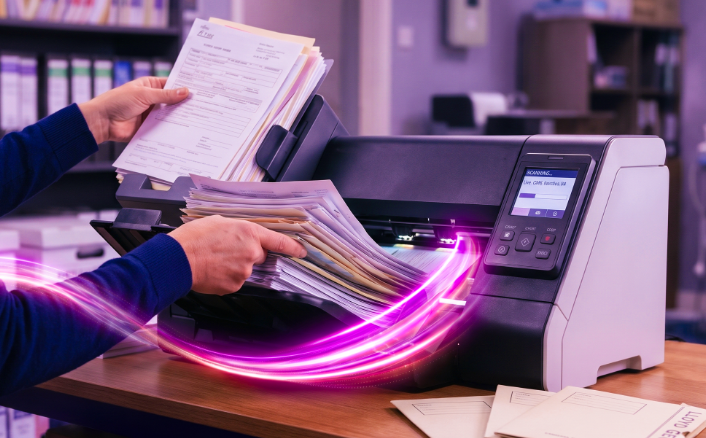
Scanning everything in a one-off project means it’s all done and dusted in around three to six months. Once the work’s out of the way, practitioners across all your sites have instant access to patient history online. The clinical team can offer better care and admin is reduced for good. You’ll know upfront exactly what the full project cost is.
This type of programme tends to be chosen by practices that have secured ICB funding or have capital budget to finance a one-off cost. It’s ideal when records are spread across multiple surgeries or sites and different practitioners need access; or where there’s a deadline such as moving premises.
Option 2 Bit by bit
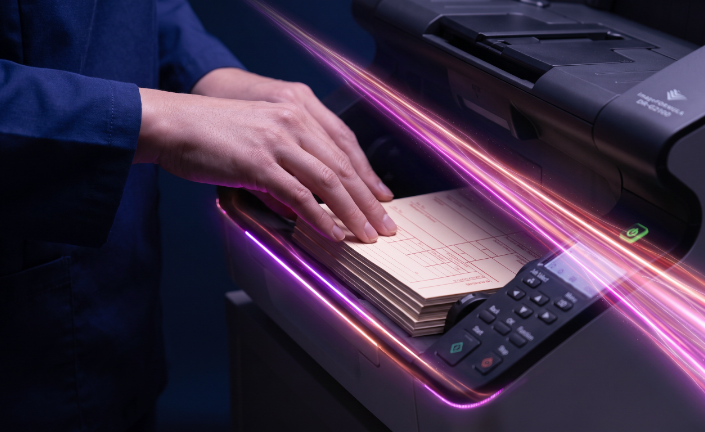
A phased approach lets you set out a more gradual digital roadmap aligned to your working practices or budget. If you need to protect cashflow, this option lets you spread the outlay across monthly payments rather than in a one-off lump sum. You can still release consulting room space by shifting paper records offsite, but could prioritise in-use records first, then digitise rarely- or never-used patient notes later on.

Selecting a partner How to choose the right scanning supplier
Of course we’re going to suggest you work with us here at OASIS if you need to digitise Lloyd George records or other hardcopy practice documents. We’ve supported GP surgeries, NHS trusts and private medical providers for decades. But realistically, you might be weighing up a few different providers – so what elements should you bear in mind?

The foundation Data security
Firstly, there are the table stakes. Your provider must have the right certifications, like BS 10008, which guarantees your scanned documents are legally admissible. ISO 27001 is also a non-negotiable, to make sure your patient data stays secure with encrypted transfers, audit trails and GDPR-compliant processes.

Next up NHS and health sector knowledge
Then there’s familiarity with the GP patient note scanning process. You don’t want a scanning supplier who’s learning about the NDR document transfer process at the same time as you are. At OASIS, we’ve managed sensitive healthcare records since 1999. We understand what’s clinically important and what’s required for compliance. Our scanning process meets NHS Digital standards right across the board: formats, metadata, quality control.
The critical factor Nitty-gritty working reality
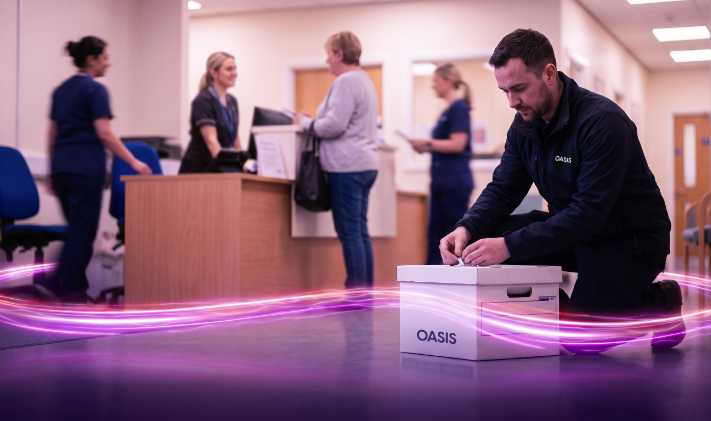
Finally, think about the reality of having a scanning supplier closely integrated into your working routines. Are their representatives friendly and responsive? Do they have examples of similar programmes – how they planned around a surgery’s unique set-up and protocols? How they dealt with challenges and made sure the programme was efficient and cost effective? How they minimised disruption? The last thing you want is to be unable to access patient information during a scanning project – our clients never have that issue.
Ask peers and colleagues in other GP practices for recommendations. We get the majority of our new doctors’ surgery clients from word-of-mouth referrals.
Take action Start scanning…and never look back
Whatever your reason for kicking off a scanning project at this particular moment in time, we can guarantee you’ll be glad you did. More space, less time wasted looking for documents, less risk of sensitive information going missing, better patient experience: Lloyd George record scanning offers all these benefits and more.
We’d love to help you reap those benefits, to talk through your options with one of our experts click the button below and get a quote today.
Book a quick meeting

- 29 | 09 | 2026
Records management: the answer to legal firms’ ESG challenges?
Read Records management: the answer to legal firms’ ESG challenges? now